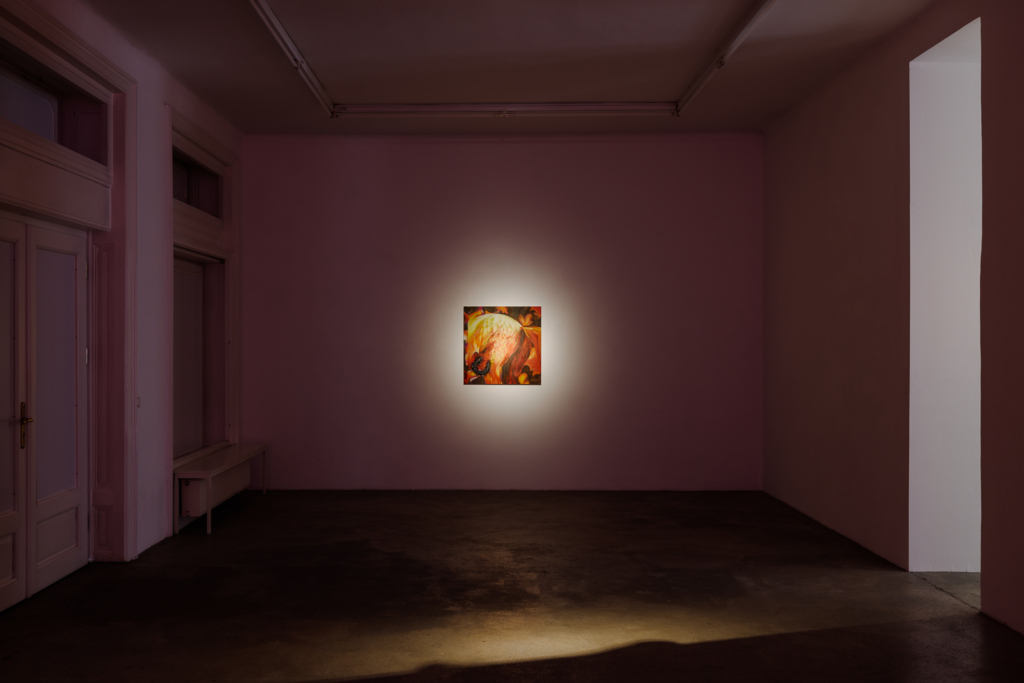
Jala Wahid, Ungovernable, installation view, SOPHIE TAPPEINER, 2026
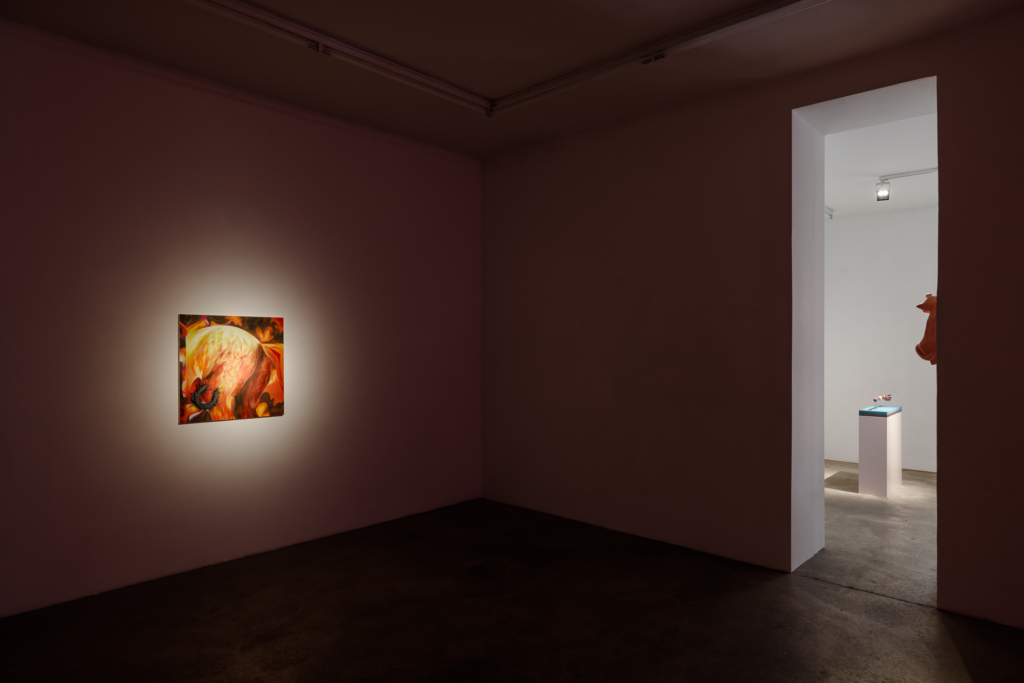
Jala Wahid, Ungovernable, installation view, SOPHIE TAPPEINER, 2026
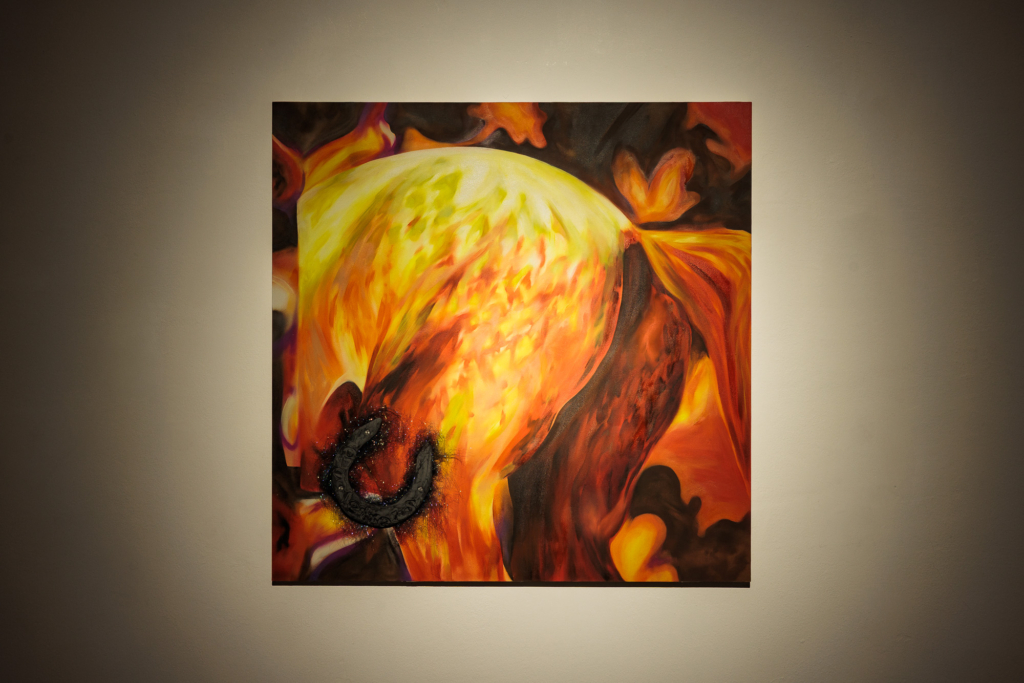
Jala Wahid, Pure Pony Intensity, 2026, oil and mixed media on board, 80 x 80 x 4 cm
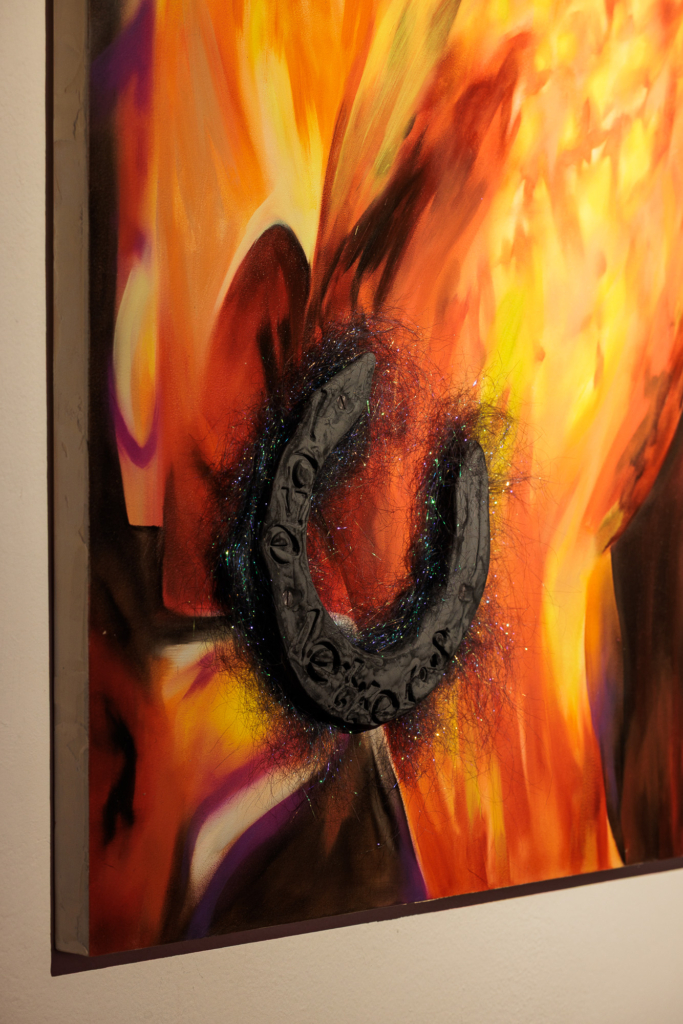
Jala Wahid, Pure Pony Intensity, 2026 (detail)
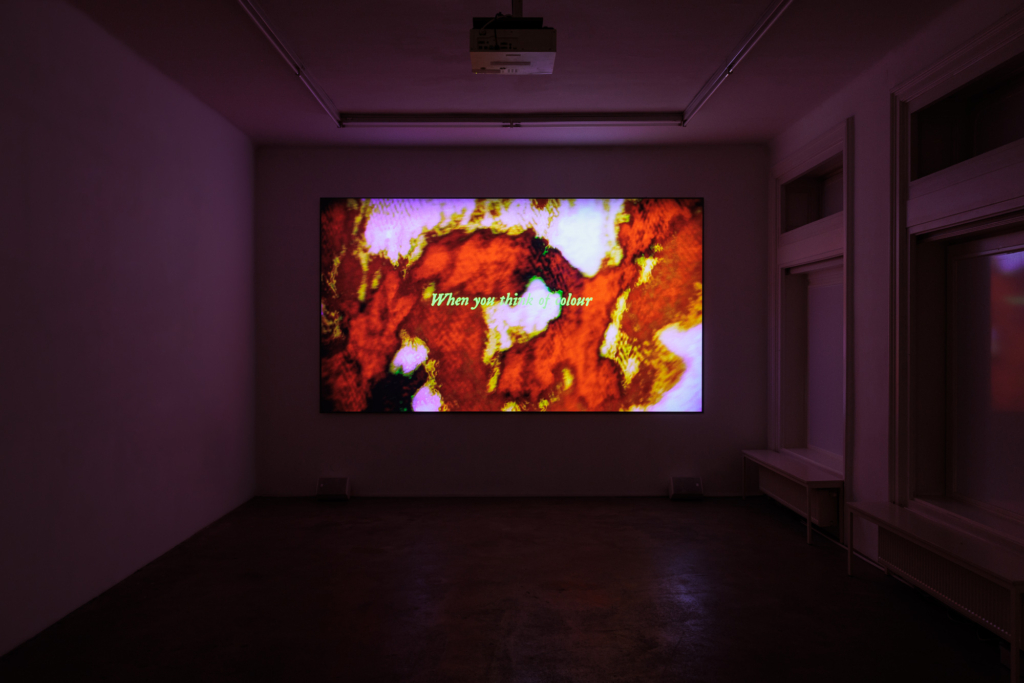
Jala Wahid, Ungovernable, 2026, single channel video, 11:00 minutes
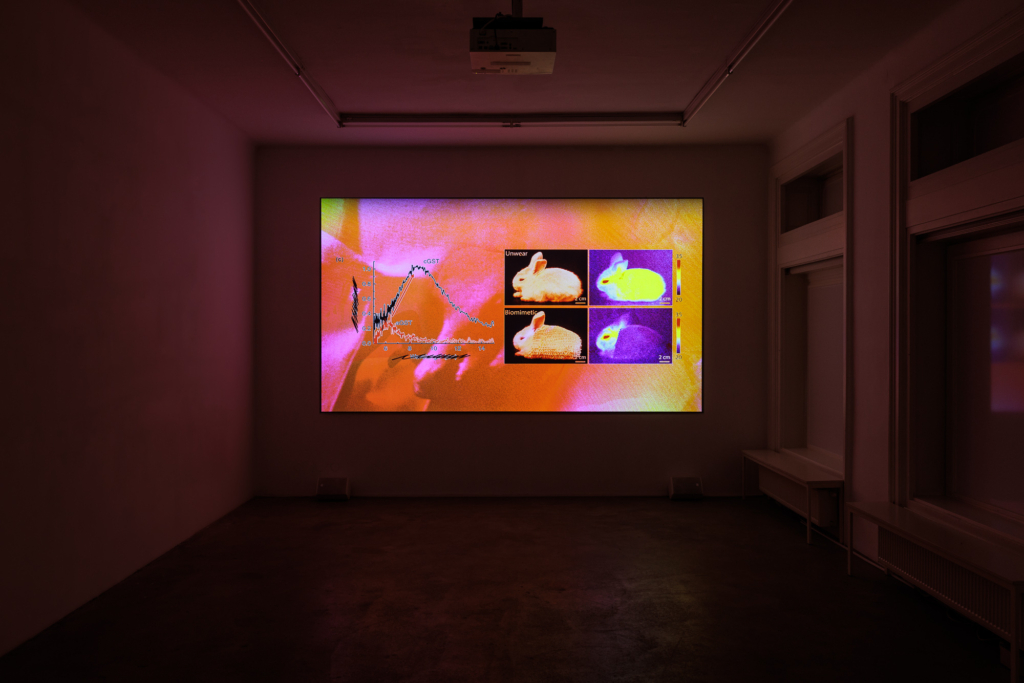
Jala Wahid, Ungovernable, 2026, single channel video, 11:00 minutes
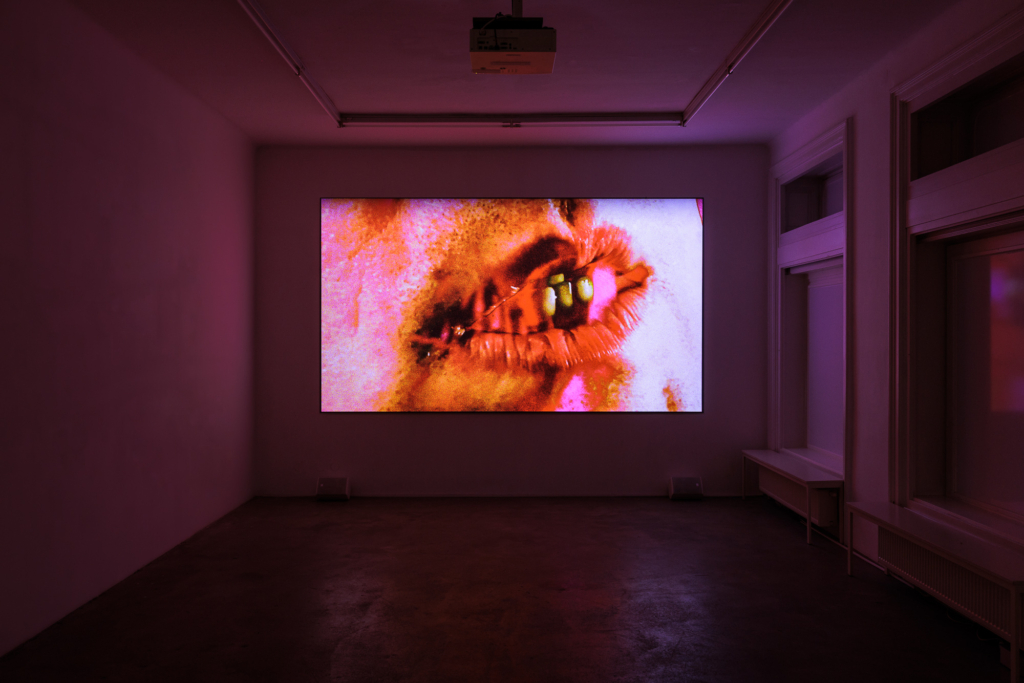
Jala Wahid, Ungovernable, 2026, single channel video, 11:00 minutes
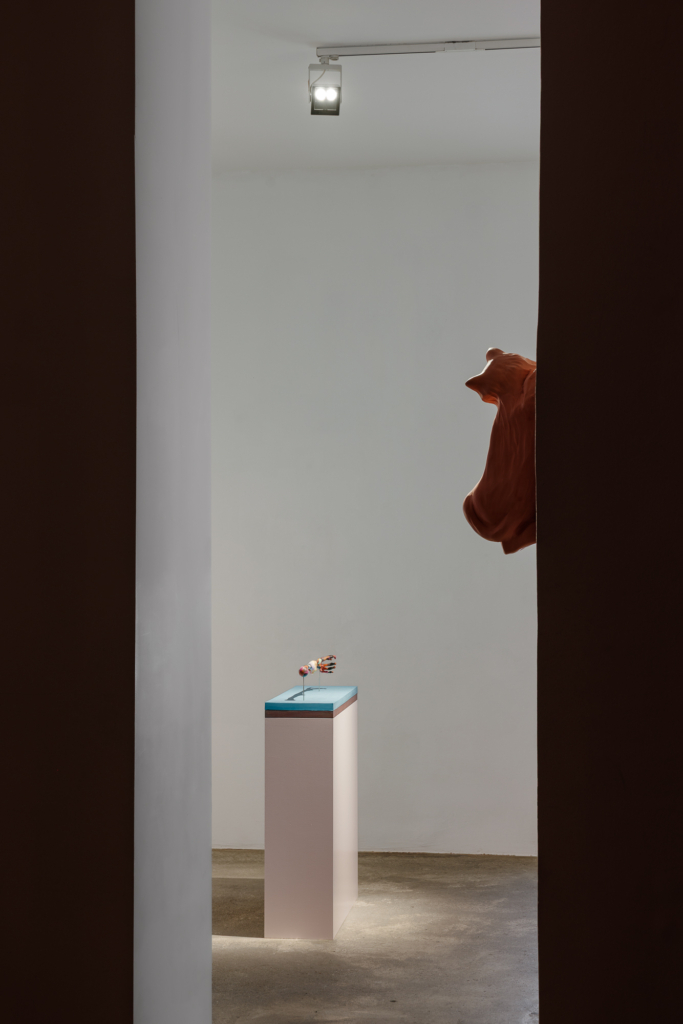
Jala Wahid, Ungovernable, installation view, SOPHIE TAPPEINER, 2026
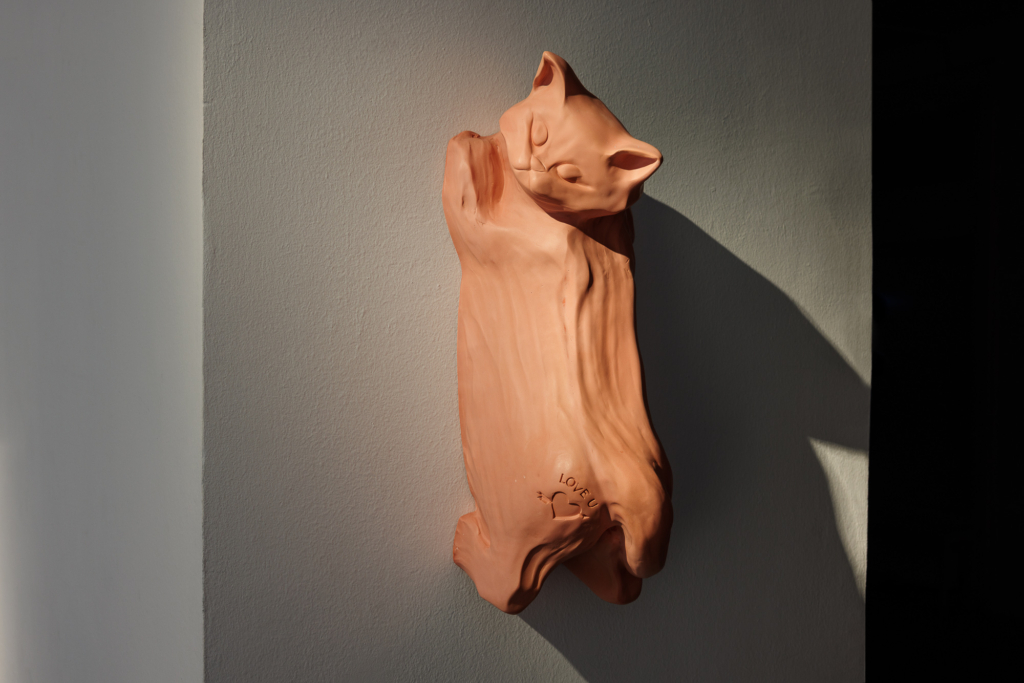
Jala Wahid, Wedding Dress, 2026, polymerised plaster, 50 x 20 x 20 cm
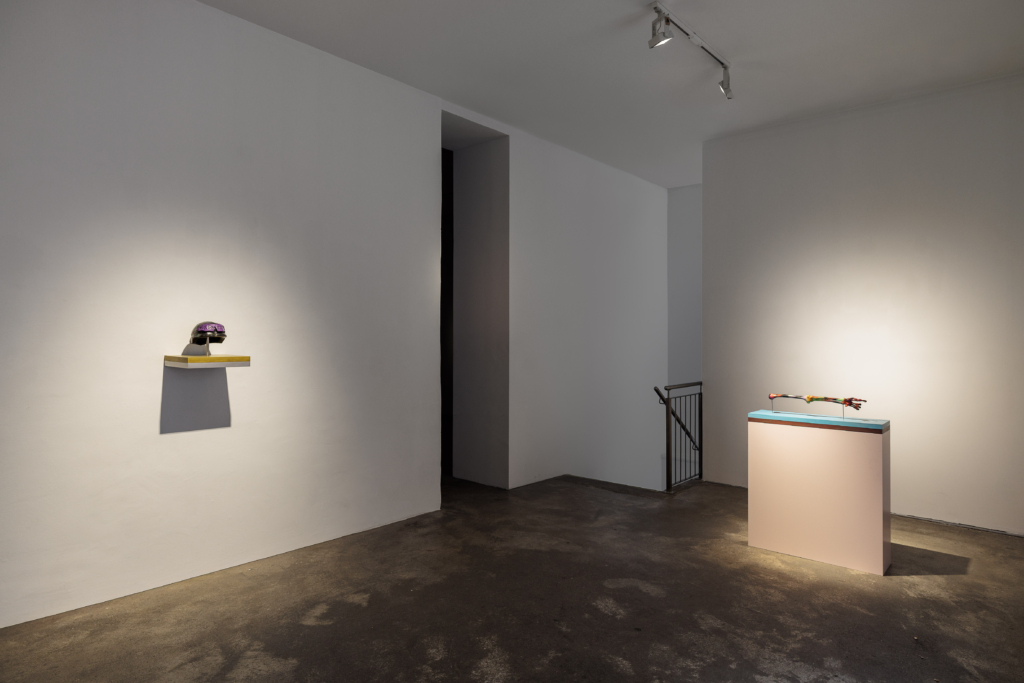
Jala Wahid, Ungovernable, installation view, SOPHIE TAPPEINER, 2026
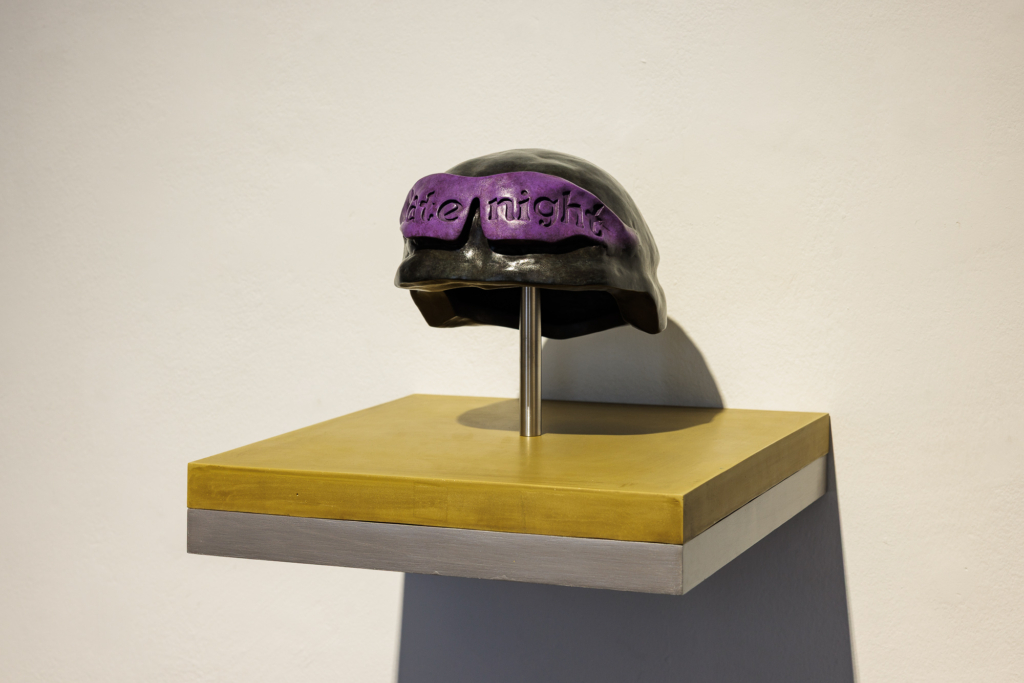
Jala Wahid, Maniacal Sex, 2026, bronze, polymerised plaster, stainless steel, wood, 32 x 35 x 35 cm
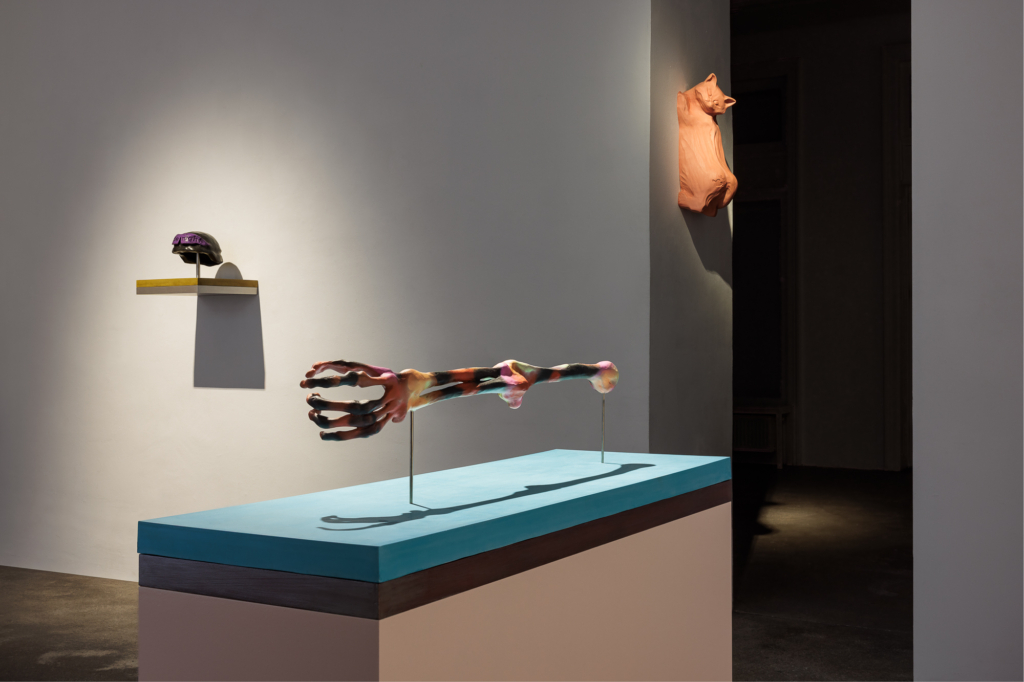
Jala Wahid, Ungovernable, installation view, SOPHIE TAPPEINER, 2026
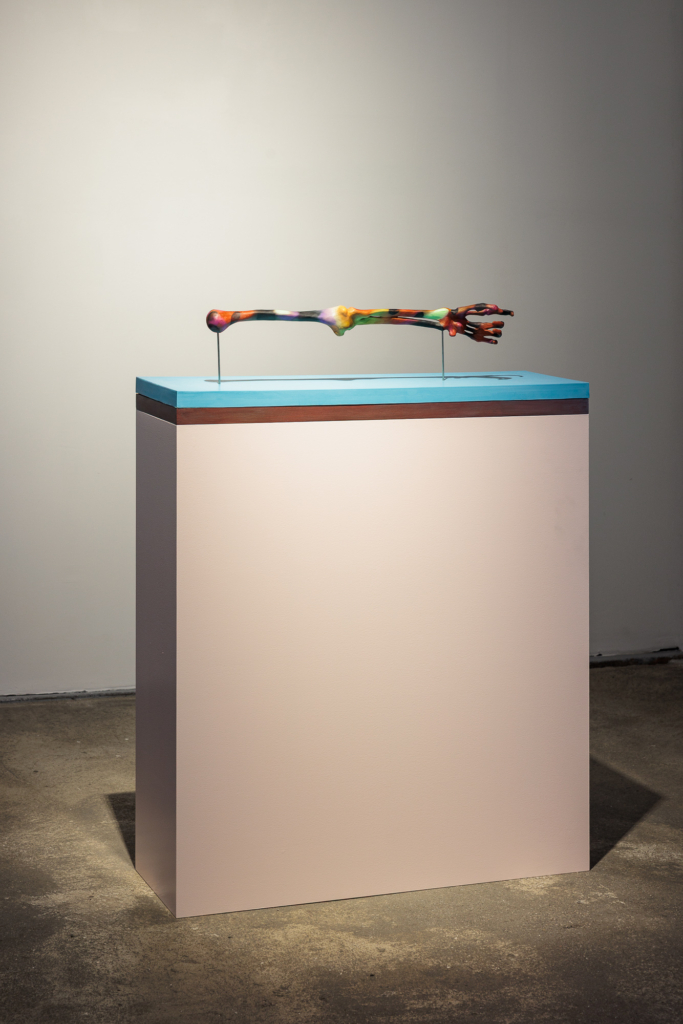
Jala Wahid, Loath Protagonist, 2026, bronze, oil paint, polymerised plaster, stainless steel, wood, 118 x 84 x 28 cm
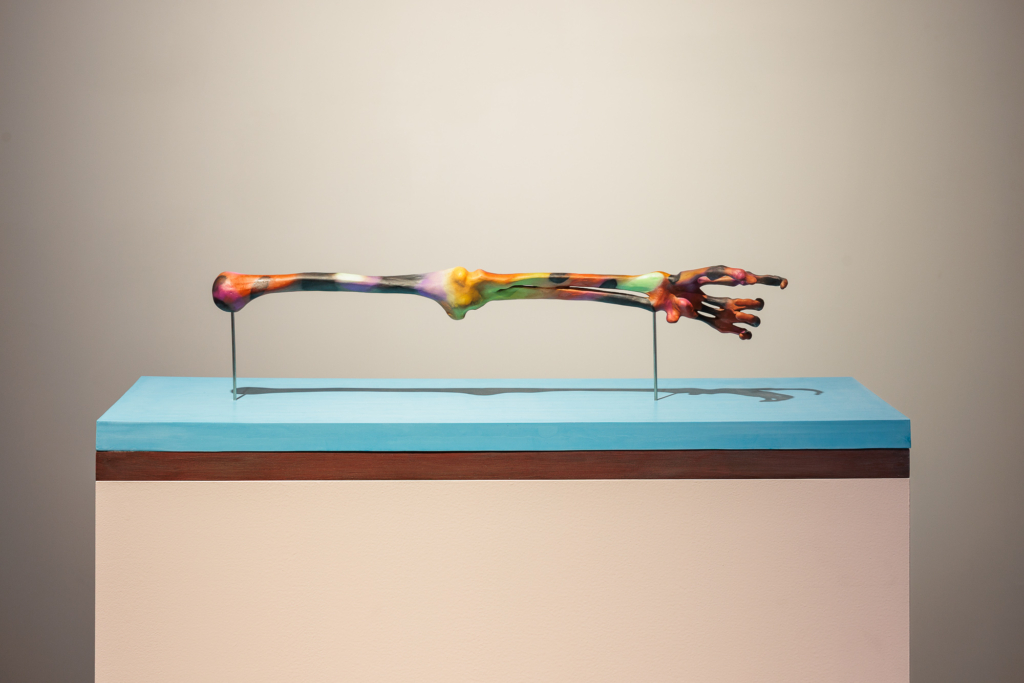
Jala Wahid, Loath Protagonist, 2026 (detail)
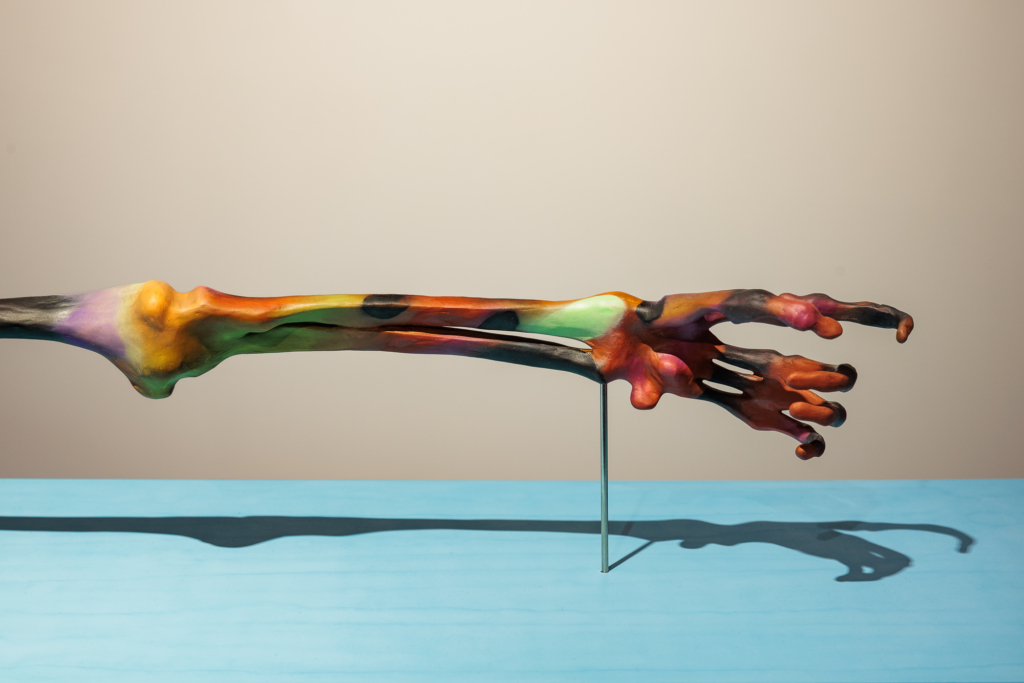
Jala Wahid, Loath Protagonist, 2026 (detail)
COLOUR AS A WEAPON
To be ungovernable, unruly, intractable. As per the Oxford English Dictionary, the phrase ‘ungovernable’ is defined as that which “cannot be governed; uncontrollable … a. Of persons (or animals); b. Of temper, passion, etc; c. Of things”. It is appropriate, then, that wilfully recalcitrant persons, animals, and things populate Jala Wahid’s presentation of new work, which is infused with a mood of passionate rebellion. This sense of being ungovernable as an emphatic method of resistance, and its corollary associations with civil disobedience and political unrest, is also suitably aligned with the artist’s ongoing research into military technologies, scientific theories, and forms of surveillance. Within this exhibition, which comprises film, painting, and sculpture, Wahid has covertly embedded intimate references to her parents’ journey from Kurdistan to the UK in the mid-1980s, with the libidinal power of these transmitted memories able to destabilise and push against the tide of insidious and violent mechanisms of state control. In turn, the complex psychic and erotic dimension of these narratives, functioning as a type of subtext, can be seen to unsettle more conventional social and historical discourses surrounding experiences of war, displacement, and forced migration.
This juxtaposition between the clinical and the corporeal is most palpable in Wahid’s new film Ungovernable. Her interest in military camouflage and advanced stealth technology is combined with allusions to the necessity of her parents’ own embodied subterfuge, an analogue and self-generated defensive camouflage, one that the artist has likened to the biological mechanisms of adaptive rapid colour change demonstrated by species of cephalopods. Recalling Lacan’s analysis of camouflage as not a fading into the background, but instead becoming mottled against it, Wahid utilises formal strategies of abstraction and disharmony to both reiterate and reinforce the magnitude and impenetrability of her chosen subject matter. This is demonstrated by her digital rendering of altered camouflage patterns, jerkily filmed on fabric and projection screens, with the camera lens forced into the position of a roving, searching eye. Accompanied by a tense electronic soundtrack, the film is additionally structured by a fragmented text which appears on the screen in a sequence of phrases. The ambiguous tone of the narrative refuses to occupy a singular or authorial voice, which is mirrored by the recurring high-contrast image of a silent mouth that grimaces, smiles, and licks its teeth. This dominant mode of obfuscation is likewise applied to her pixelated and saturated reproduction of photographs of horse and human skeletons taken at archaeological sites and during excavations, and to research outputs extracted from scientific case studies, including images of test animal subjects and microscopic views of cellular structures. For Wahid, the degradation of the image proposes the potential for invisibility in the face of intensity. Colour is a weapon, a device, a tool. My parents were ungovernable in their journey, colour is ungovernable. The film is an experiment in considering the emotive potential of colour, how colours might interact with one another when layered or converged. How does colour behave when a body is under duress? How does colour behave when it’s in love?
Accompanying Ungovernable is a selection of new painting and sculptural work. Here, Wahid experiments with a kitsch sentimentality, playing with noisy and garish colours, questioning the limits of aesthetic taste. Her catalogue of persons, animals, and things become objects imbued with symbolic value. Pure Pony Intensity refers to the story of her parents’ riding horseback on the Iraq and Iran border during their escape. The fiery brushwork speaks to the latent charge of eroticism, while the affixed black horseshoe, set on a bed of sparkly straw-like tinsel, is inscribed with the phrase ‘love letters’, offering an affectionate souvenir. Inspired by her father’s experience as a Kurdish freedom fighter, Loath Protagonist takes the form of an arm pulling the trigger of a gun, the body reduced to its skeletal form. Designed as a military helmet, the phrase ‘date night’ inscribed on the protective goggles, Maniacal Sex imagines how romantic courtship could still take place under militarised surveillance. In Wedding Dress, the “LOVE U ???? ” tattooed on the rear end of the coquettish cat derives from an affectionate drawing exchanged between her parents years later, when Wahid’s father was dying in hospital. Viewed collectively, these works suggest love as a force that can still bloom under persecution or tragedy. By establishing a brash incongruence between her myriad references and the work’s final shape, therefore indicating the inexplicable sense of alienation produced by the war machine, Wahid also suggests the scope of an emerging counter-narrative, one imbued with tenderness and transgenerational remembrance.
– Philomena Epps